What Are Consultants Charging in 2026?
Consulting Fees in 2026: Real Rates for Advisors, Fractional Leaders & Independent Consultants
10 min read ·
Aug 4, 2026
The biggest secret among consultants and coaches?
Our fees.
What should I charge?
How do I know when it's time to up my fees?
What are the benchmarks in my region?
Сonsulting fees remain one of the best-kept secrets in the industry.
Very few know what clients are actually paying across regions, industries, and consulting models. The result is predictable: consultants undercharge, overcomplicate pricing, and make critical business decisions based on guesswork rather than market reality.
To bring more transparency to the conversation, we launched the 2026 Global Consulting Fees Survey, gathering data from consultants, coaches, advisors, trainers, and fractional leaders around the world.
Based on the preliminary results, we'll explore questions every consultant wants answered: What are the real consulting rates in 2026? How do fees vary by region? Are rates rising? Which pricing models are winning? And who is actually commanding premium fees—and why?
What Is the Average Consulting Fee in 2026?
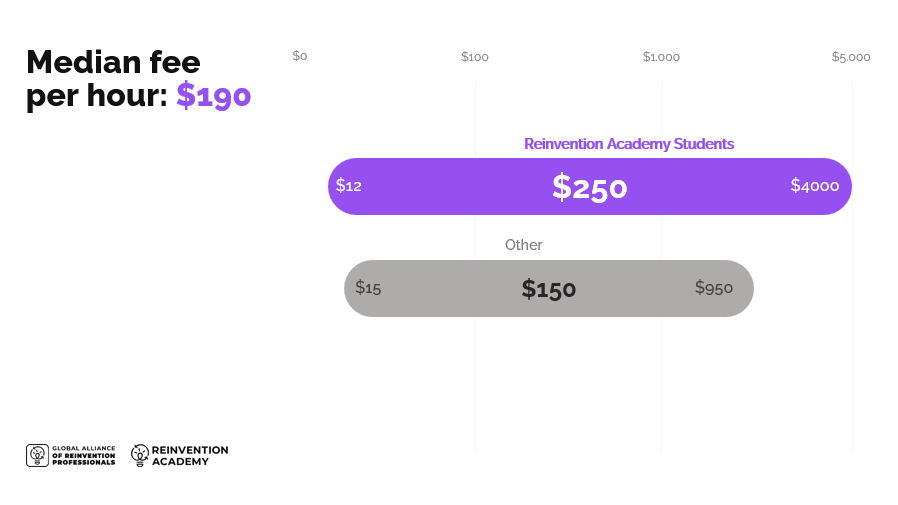
According to the preliminary results of the 2026 Global Consulting Fees Survey, the median consulting fee is $190 per hour.
Source: 2026 Global Consulting Fees Survey by Reinvention Academy
Yet the most interesting number is not the median.
It is the range.
Survey respondents reported fees as low as $12 per hour and as high as $4,000 per hour.
That is a remarkable spread for a single profession.
The range is everywhere. It's more about your guts and your value than anything else.
Consulting Fees by Region
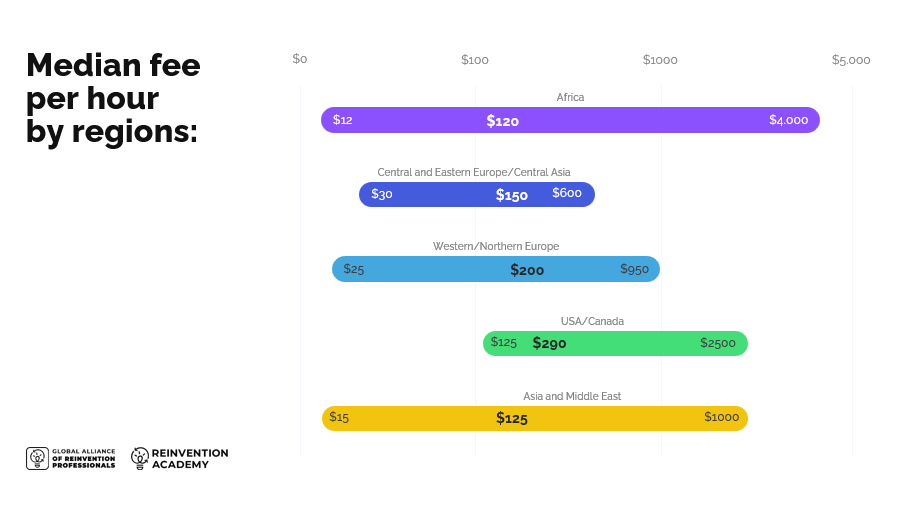
Not surprisingly, North America continues to report the highest median consulting fees, at $290 per hour, followed by Western and Northern Europe at $200 per hour.
The median fees in Central and Eastern Europe/Central Asia ($150) and Asia and the Middle East ($125) are lower, while Africa reports a median of $120 per hour.
Source: 2026 Global Consulting Fees Survey by Reinvention Academy
In Africa, reported fees span from $12 to $4,000 per hour. In Asia and the Middle East, they range from $15 to $1,000 per hour. Even within North America, fees vary from $125 to $2,500 per hour.
The geography matters. But not as much as your ability to create value in a volatile world.
Are Consulting Rates Increasing in 2026?
The short answer is yes.
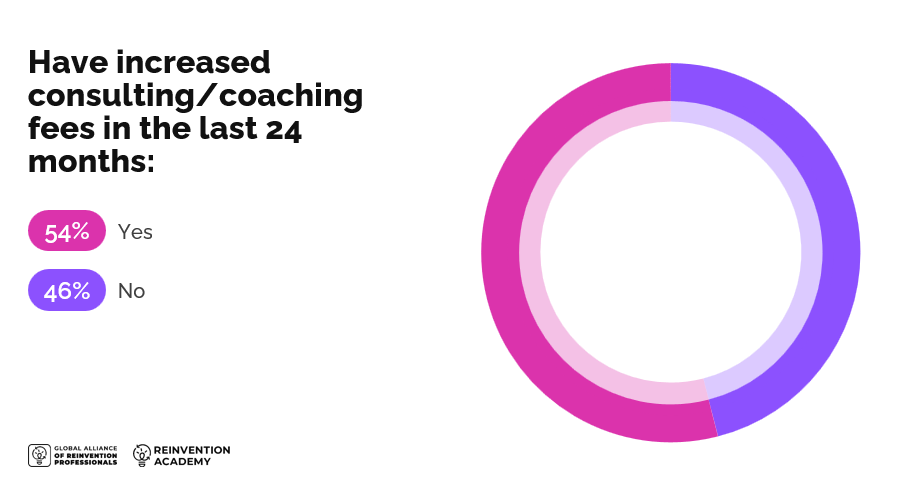
According to the survey, 54% of consultants increased their fees over the last 24 months, while 46% reported no increase.
Source: 2026 Global Consulting Fees Survey by Reinvention Academy
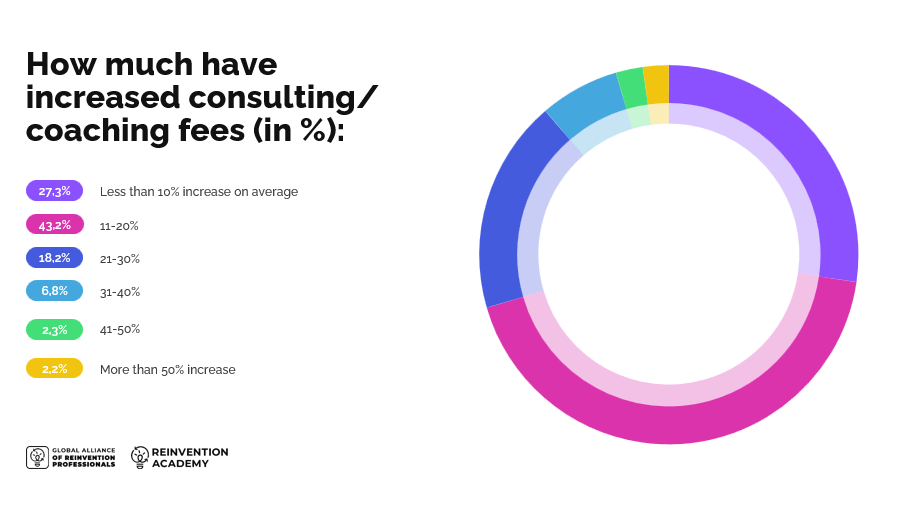
Among those who raised their rates:
- 43.2% increased fees by 11–20%
- 18.2% increased fees by 21–30%
- 6.8% increased fees by 31–40%
- 4.5% increased fees by more than 40%
Source: 2026 Global Consulting Fees Survey by Reinvention Academy
In other words, fee increases are not limited to inflation adjustments. A significant share of consultants are making substantial pricing moves.
If you have not reviewed your pricing in the last 12–24 months, the data suggests many of your peers already have.
Which Consulting Pricing Models Are Winning in 2026?
For decades, hourly billing was the default consulting business model.
Today, that is no longer the case.
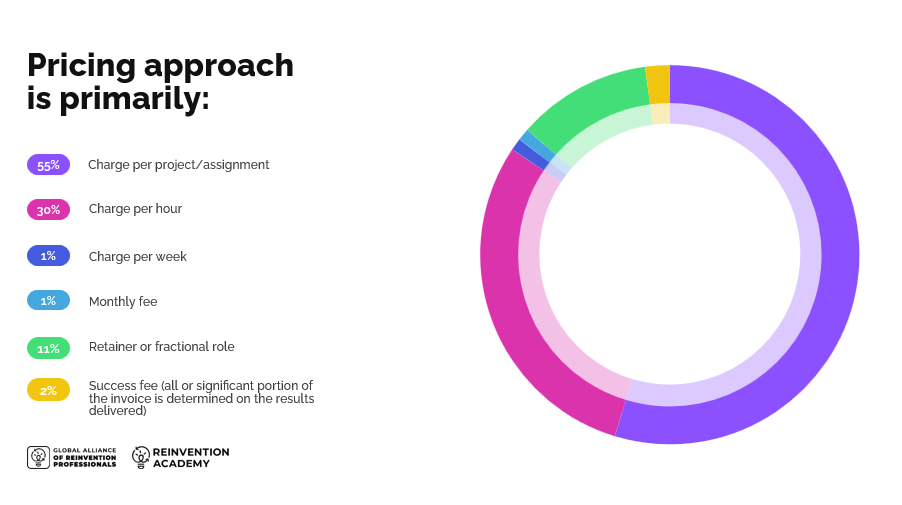
According to the survey, 55% of respondents primarily charge by project or assignment, making it the dominant pricing model by a wide margin.
Source: 2026 Global Consulting Fees Survey by Reinvention Academy
Only 30% still rely primarily on hourly billing. Just two years ago, that number was 36%.
Meanwhile, 11% work through retainers or fractional roles, while a smaller group is experimenting with success fees and other performance-based arrangements.
The direction of travel is clear.
Consultants are moving away from selling time and toward selling outcomes, access, implementation, and ongoing partnership.
Why Are Hourly Consulting Fees Declining?
The decline of hourly billing is not really about pricing.
It is about value.
For decades, consultants charged for time because time was a reasonable proxy for effort. Research took days. Analysis took weeks. Benchmarking required large teams and expensive databases. The more work required, the more hours could be billed.
That logic is becoming harder to sustain.
Today, AI can compress activities that once took days into hours and hours into minutes. A consultant who uses better tools can often deliver the same output faster than ever before.
At the same time, organizations are operating under growing pressure—from economic uncertainty and technological disruption to talent shortages and shifting customer expectations. They care less about how many hours were worked and more about whether the work helped them move forward.
As a result, consulting fees are gradually shifting away from time spent and toward value created.
The question is no longer, "How many hours will this take?"
The question is, "What difference will this make?"
The Future of Consulting: 9 Trends Reshaping Business in 2026
In our companion article, The Future of Consulting: 9 Trends Reshaping Business in 2026, I break down the forces driving these changes and what they mean for consultants, coaches, advisors, and fractional leaders.
The Rise of Retainers, Fractional Roles, and Process Consulting
One of the most significant shifts in the survey is happening outside the hourly-versus-project debate.
According to the 2026 Global Consulting Fees Survey, 11% of respondents now work primarily through retainers or fractional engagements.
Two years ago, that number was just 0.5%.
This reflects a deeper shift in the profession.
For decades, consultants were hired to provide answers. Increasingly, they are being hired to help organizations find answers under uncertainty.
In other words, the market is moving from content consulting to process consulting.
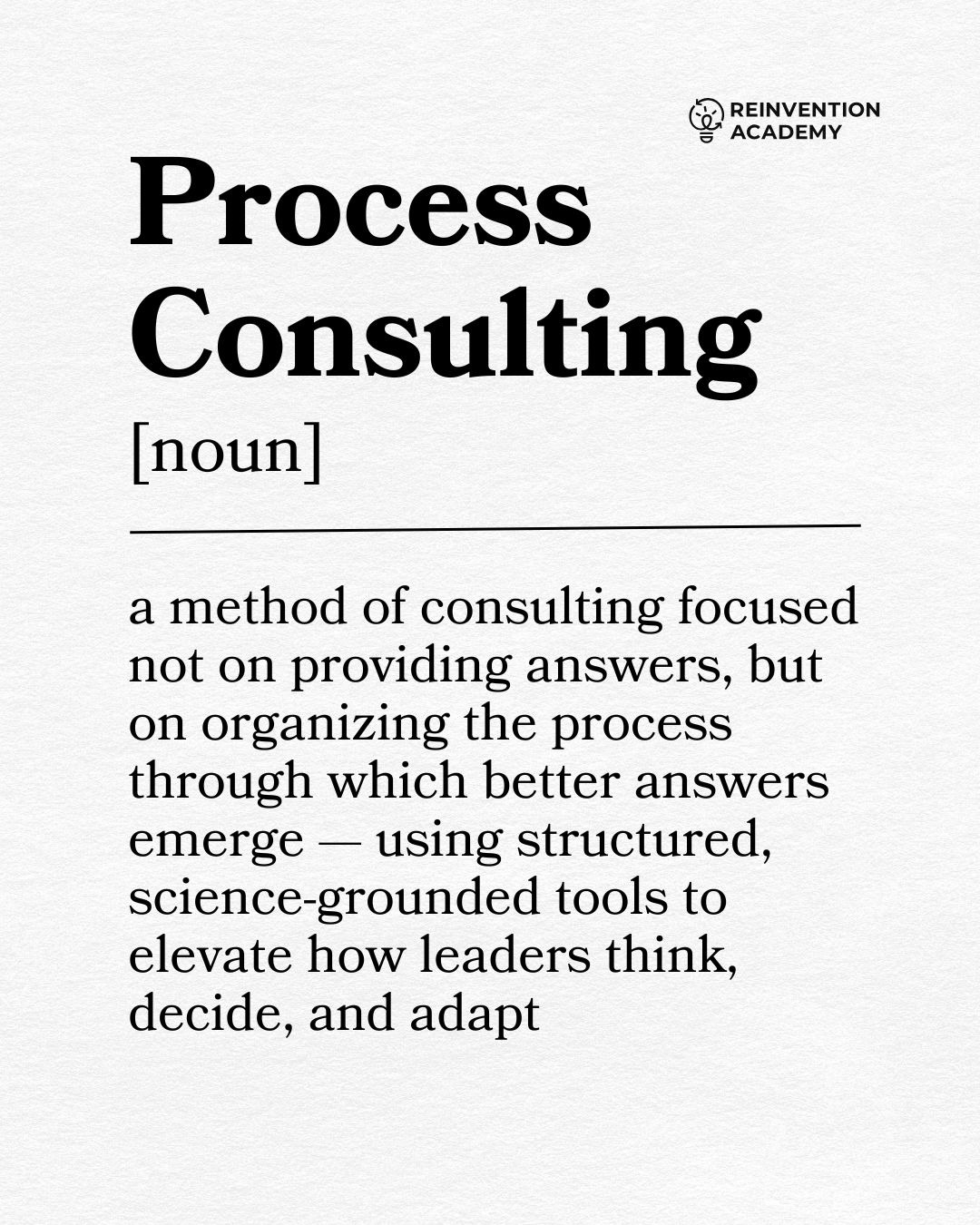
Clients are buying less advice and more ongoing access to judgment, perspective, and decision support.
That helps explain why retainer and fractional models are growing so quickly.
Who Charges Premium Consulting Rates?
One of the most interesting shifts in consulting pricing has little to do with experience, credentials, or even specialization.
I call it the Volatility Premium.

It is the additional fee consultants, coaches, advisors, and fractional leaders can command when their toolkit is built for the world clients are actually living in—not the stable, predictable world many consulting methodologies were designed for.
In a volatile market, clients are not simply buying expertise.
They are buying clarity.
They are buying the ability to make decisions when the answer is not obvious.
They are buying help navigating uncertainty.
That creates two kinds of consultants.
Those who earn a premium because volatility is their natural operating environment.
And those who are increasingly squeezed because they are still selling stability-era tools in a volatility-era market.
The Future of Consulting Pricing: 4 trends emerging
The 2026 Global Consulting Fees Survey highlights four trends worth watching.
1. Consulting fees continue to rise.
More than half of respondents increased their rates over the last 24 months, often by double-digit percentages.
2. Hourly billing continues to decline.
The share of consultants relying primarily on hourly fees fell from 36% to 30% in just two years. As AI makes many consulting activities faster and easier, time is becoming a less useful measure of value.
3. Project-based, retainer, and fractional models continue to grow.
Clients increasingly want ongoing support rather than isolated advice. This shift also reflects the growing move from content consulting to process consulting—from selling answers to helping organizations navigate change and uncertainty.
4. A new pricing premium is emerging.
The highest fees increasingly go to consultants who help clients make decisions under uncertainty, adapt faster, and navigate a more volatile business environment. We call this the Volatility Premium.
Taken together, these trends suggest that consulting pricing is becoming less about time spent and more about value created.
The exact model will vary by industry, geography, and specialization. But the direction of travel is becoming increasingly clear.
.svg)

Join 15,000+ professionals reading Reinvention Weekly